Wow what an eventful 2 weeks! Who would have thought that Team GB would have finished 3rd in the tables? Can you remember where you were on ‘Super Saturday’? I remember shouting at the television with the family as Jessica Ennis, sprinted to the finishing line as she won gold in the Heptathlon, then a few minutes later cheering as the lovely Greg Rutherford took home gold in the long jump, and then moments later, jumping for joy as Mo Farah won the countries first gold in the 10,000 meters in over 100 years.
1 week on and I still get goose bumps thinking about some of these events.
You could write & reminisce for hours over the wonderful achievements that Team GB have achieved, not just in winning medals, but the way the whole country united together and what an inspiration every athlete has been. There are not many people who would get a fractured jaw as a result of getting wacked with a hockey stick, and will be back on the pitch 3 days later like Kate Walsh, then successfully achieve bronze in the tournament.
Working and living in London, I have experienced the other side of the Olympics as well, and the atmosphere around the city has been electric. Just walking around, every street was filled with red, blue & white in all different forms, from flags, to buildings and clothing. Every bar and pub would have an event showing, and you would hear silence as the athletes were about to start their journey to the finish line. That silence would last for spilt of a second, as it was shortly followed by cheering and shouting.
The Olympics has changed the country and lifted our spirits in these difficult times. Children and adults of all ages have been inspired & motivated to take up a sport, or to hold their own family version of the Olympics, and it does make you proud to be British, and is an experience that we will relive forever.
Well done Team GB on everything that you have achieved!

Showing posts with label motivation. Show all posts
Showing posts with label motivation. Show all posts
Friday, 17 August 2012


Monday, 30 April 2012
What's your motivation?

But sometimes we may falter along the way and find that we don’t want to refuse that big piece of chocolate cake at the restaurant, or simply that we have lost our motivation.
So here are some tips to keep on going if you are finding it tough:
Once you’ve set yourself a deadline make a conscious effort to review your progress a third of the way through or sooner if possible. Look at how it’s going and if there is anything you are struggling with.
Look at what isn’t working and why?
Are there any patterns to why it isn’t working?
Make a small change to what you are doing to get yourself back on track. For instance if you aren’t saving up for that holiday as quickly as you would like is there anything else you can cut back on to save money? If your customers are not paying as quickly as they promised, can you get the sales team involved in talking to the client?
Don’t give up! If you want to get into THAT dress, go look at it, imagine yourself in it. If you want to go on holiday, imagine yourself lying on that sunlounger or taking in the city’s delights. And if you have a project at work that isn’t going as smoothly as you would like, talk to your boss and explain your situation. Ask for help and assistance to get back on track. Discuss the deadline and see if it’s realistic.
Once you made some changes, set yourself another review date, preferably half way through, to see if the changes you have made are working. And when you have reached that goal, don’t forget to reward yourself, even if it’s a cup of tea with a slice of cake.
Helen Mills
Friday, 6 April 2012
Run Clown Run!
3 months ago I signed up to take on what seemed like the challenge of a life time, to run 6 miles in aid of Sports Relief. My main aim for doing so was to improve on my health in time for the summer, whilst raising money for a good cause.
The past 3 months have been fall of temptations and procrastinations to do anything but the gym and there have been times when, let’s say, I have let the odd one get the better of me. However with the motivation of helping others, as well as the thought of letting all my sponsors down, I would head down to the gym.
On a gorgeous Sunday 25th March, dressed as a clown and deprived of an hours sleep thanks to the clocks going forward, I joined the first leg of runners at 10:15 to take the challenge on. It was a great atmosphere, with people of all ages running/walking/hopping/skipping for 1, 3 or 6 miles around The Mall – Buckingham Palace. Now in my leg, there were not many people dressed up and being the only clown it was very easy to spot me, so much so I gained a lot of attention from the supporters including the children, one of which asked for my photo as I run past him. I managed to run most of the way and probably could have completed the run a lot quicker if I wasn’t too busy looking at the celebs; I didn’t even stop to talk to my family or fellow runners. The run its self was the best run I have had, and without all the practice I would not have managed to complete the run within my target of 1 hour, or to be a head of my personal target ready for the summer holidays.
I have learnt a lot the past few months, with the biggest being if you want to achieve a goal which looks unachievable set yourself smaller goals which will help you to go beyond your target.
I would like to take this opportunity to thank all my supporters for their support and motivation over the past 3 months.
Stephanie Fletcher
The past 3 months have been fall of temptations and procrastinations to do anything but the gym and there have been times when, let’s say, I have let the odd one get the better of me. However with the motivation of helping others, as well as the thought of letting all my sponsors down, I would head down to the gym.
On a gorgeous Sunday 25th March, dressed as a clown and
 deprived of an hours sleep thanks to the clocks going forward, I joined the first leg of runners at 10:15 to take the challenge on. It was a great atmosphere, with people of all ages running/walking/hopping/skipping for 1, 3 or 6 miles around The Mall – Buckingham Palace. Now in my leg, there were not many people dressed up and being the only clown it was very easy to spot me, so much so I gained a lot of attention from the supporters including the children, one of which asked for my photo as I run past him. I managed to run most of the way and probably could have completed the run a lot quicker if I wasn’t too busy looking at the celebs; I didn’t even stop to talk to my family or fellow runners. The run its self was the best run I have had, and without all the practice I would not have managed to complete the run within my target of 1 hour, or to be a head of my personal target ready for the summer holidays.
I have learnt a lot the past few months, with the biggest being if you want to achieve a goal which looks unachievable set yourself smaller goals which will help you to go beyond your target.
I would like to take this opportunity to thank all my supporters for their support and motivation over the past 3 months.
Stephanie Fletcher
Monday, 30 January 2012
Wheres The Motivation?
It was two weeks ago, on a wet and cold Thursday evening (a bit like today), and I had just fought my way through rush hour, and I sat on the sofa, with a cup of tea watching Come Dine With With Me, for what was suppose to be a 5 minute rest, before I went to the gym.
5 minutes slowly turned into 10 then into 20 minutes, and before long I had lost all motivation to go. I sat there an hour later, regretting not going straight from work, as then I would not have had the temptation of saying “I will make up for it tomorrow” or “it’s too cold to go back outside”. My mother didn’t help by convincing me that it is too cold outside, and that I had had a long day either.
We were watching BBC Ones The One Show, when Fern Cotton and Gary Lineker did a n advert for run 1 mile for Sports Relief on 25th March. It was then, I got my motivation! Seeing and hearing how my contribution to running a mile would help raise money for charities all over the UK and the World, and how it has bought families, communities the young and the old together has inspired me. I instantly logged on on-line to sign up, where I then had the dilemma of running, 1, 3 or 6 miles. I thought to myself that 1 mile would be a “walk in the park”, 3 miles would be achievable, but 6 miles would be a challenge for someone who was at her peak 10 years ago, and whom needs to reach her target by May.
2 weeks on, I am training 4/5 times a week to complete my first ever charity run, and finish the 6 miles in an hour. So far, it’s going well, I have inspired another fellow “Get Fit” lady, who has seen me on numerous occasions in the gym to enter, as well as the men of Dale Carnegie London, and I have even broken my record by 2 minutes, but it hasn’t been easy. I am a very sociable person, and I can easily be persuaded into activities which are not fit related, but my motivation is at an all time high so I have actually said no, on the odd occasion. I have been inspired to not only reach my own personal goals, but hopefully help to achieve others along my way too. It’s not always about reaching your targets, but how you achieve them, and trying to keep motivated as you do so. To achieve my target, I will be doing a range of events, including one which will be a big test to me……..a day’s silence!! If I can achieve that, then I can achieve anything, and so can you.
Stephanie Fletcher
5 minutes slowly turned into 10 then into 20 minutes, and before long I had lost all motivation to go. I sat there an hour later, regretting not going straight from work, as then I would not have had the temptation of saying “I will make up for it tomorrow” or “it’s too cold to go back outside”. My mother didn’t help by convincing me that it is too cold outside, and that I had had a long day either.
We were watching BBC Ones The One Show, when Fern Cotton and Gary Lineker did a
 n advert for run 1 mile for Sports Relief on 25th March. It was then, I got my motivation! Seeing and hearing how my contribution to running a mile would help raise money for charities all over the UK and the World, and how it has bought families, communities the young and the old together has inspired me. I instantly logged on on-line to sign up, where I then had the dilemma of running, 1, 3 or 6 miles. I thought to myself that 1 mile would be a “walk in the park”, 3 miles would be achievable, but 6 miles would be a challenge for someone who was at her peak 10 years ago, and whom needs to reach her target by May.
2 weeks on, I am training 4/5 times a week to complete my first ever charity run, and finish the 6 miles in an hour. So far, it’s going well, I have inspired another fellow “Get Fit” lady, who has seen me on numerous occasions in the gym to enter, as well as the men of Dale Carnegie London, and I have even broken my record by 2 minutes, but it hasn’t been easy. I am a very sociable person, and I can easily be persuaded into activities which are not fit related, but my motivation is at an all time high so I have actually said no, on the odd occasion. I have been inspired to not only reach my own personal goals, but hopefully help to achieve others along my way too. It’s not always about reaching your targets, but how you achieve them, and trying to keep motivated as you do so. To achieve my target, I will be doing a range of events, including one which will be a big test to me……..a day’s silence!! If I can achieve that, then I can achieve anything, and so can you.
Stephanie Fletcher
Monday, 21 November 2011
Obtaining willing commitment by understanding what influences others !
Human interaction is based on a entricate system of give and take. Quick example could be as simple as “I will do this for you even if I won’t get something in return right now, because you will ‘owe me one’ for future redemption.”
Robert B. Cialdini, a professor in psychology at Arizona State University, has been studying the importance of persuasion in influencing our social and workplace relationships.
From his research in this area, Cialdini has identified six widely used and usually successful principles of influence:
1. Reciprocation.
People are more willing to comply with requests (for favours, services, information, and concessions) from those who have provided such things first. Because people feel an obligation to reciprocate, Cialdini found that free samples in supermarkets, free home inspections by exterminating companies, and free gifts through the mail from marketers or fund raisers were all highly effective ways to increase compliance with a follow-up request.
For example, according to the American Disabled Veterans organization, mailing out a simple appeal for donations produces an 18% success rate. Enclosing a small gift, such as personalized address labels, nearly doubles the success rate to 35%. “Since you sent me some useful address labels, I’ll send you a small donation in return.”
2. Commitment and Consistency.
People are more willing to be moved in a particular direction if they see it as consistent with an existing or recently-made commitment. For instance, high pressure door-to-door sales companies are plagued by the tendency of some buyers to cancel the deal after the salesperson has left and the pressure to buy is no longer present.
When you visit a car dealer to purchase a new car, one of the first questions asked by the sales person is, “What kind of qualities are you looking for in a car?” They then proceed to direct you to models that have attributes that are consistent your needs in a car.
3. Authority.
People are more willing to follow the directions or recommendations of someone they view as an authority. Few people have enough self-assertiveness to question authority directly, especially when that authority holds direct power over an individual and is in a face-to-face confrontation or situation.
This is why children are especially vulnerable to adults (and especially trusted adults such teachers or camp counselors) — they are taught to view adults as authority figures, and will often do what they are told without question.
4. Social Validation.
People are more willing to take a recommended step if they see evidence that many others, especially similar others, are taking, buying or using it. Manufacturers make use of this principle by claiming that their product is the fastest growing or largest selling in the market.
Cialdini found that the strategy of increasing compliance by providing evidence of others who had already complied was the most widely used of the six principles he encountered.
Some people need to feel like they are a part of the “in crowd” by using or doing what everybody else is perceived as using or doing.
5. Scarcity.
People find objects and opportunities more attractive to the degree that they are scarce, rare, or dwindling in availability. Hence, newspaper ads are filled with warnings to potential customers regarding the folly of delay: “Last three days.” “Limited time offer.” “One week only sale.”
One particularly single-minded movie theatre owner who managed to load three separate appeals to the scarcity principle into just five words of advertising copy that read, “Exclusive, limited engagement, ends soon.”
6. Liking and Friendship.
People prefer to say yes to those they know and like. If you doubt that is the case, consider the remarkable success of the Tupperware Home Party Corporation, which arranges for customers to buy its products not from a stranger across a counter but from the neighbour, friend, or relative who has sponsored Tupperware party and who gets a percentage of its profits.
According to interviews done by Cialdini, many people attend the parties and purchase the products not out of a need for more containers that go pffft when you press on them, but out of a sense of liking or friendship toward the party sponsor.
A social network’s business value is in the sheer number of people who sign up to use it. And what better way to induce people to drive new users and traffic to their sites than to have friends recommend the site to their other friends?
Obviously, not every situation is open to direct persuasion or influence using one of these six factors. But being aware of these factors may help you better navigate a personal, family or work situation better in the future.

The renowned communication specialist Dale Carnegie once said, “When dealing with people, remember you are not dealing with creatures of logic, but creatures of emotion.” People are far more willing to help you get your way with something if they view you as someone similar to them, are friendly and polite, and treat the other person as though you were asking a favour or task of yourself.
Therefore to quickly summarize this weeks blog . By understanding what motivates people to take action allows you gain the willing co-operation , so treat others like you would like to be treated by them and you will increase your ability to influence and motivate people to take action.
Mark de Stadler
Performance Consultant
Robert B. Cialdini, a professor in psychology at Arizona State University, has been studying the importance of persuasion in influencing our social and workplace relationships.
From his research in this area, Cialdini has identified six widely used and usually successful principles of influence:
1. Reciprocation.
People are more willing to comply with requests (for favours, services, information, and concessions) from those who have provided such things first. Because people feel an obligation to reciprocate, Cialdini found that free samples in supermarkets, free home inspections by exterminating companies, and free gifts through the mail from marketers or fund raisers were all highly effective ways to increase compliance with a follow-up request.
For example, according to the American Disabled Veterans organization, mailing out a simple appeal for donations produces an 18% success rate. Enclosing a small gift, such as personalized address labels, nearly doubles the success rate to 35%. “Since you sent me some useful address labels, I’ll send you a small donation in return.”
2. Commitment and Consistency.
People are more willing to be moved in a particular direction if they see it as consistent with an existing or recently-made commitment. For instance, high pressure door-to-door sales companies are plagued by the tendency of some buyers to cancel the deal after the salesperson has left and the pressure to buy is no longer present.
When you visit a car dealer to purchase a new car, one of the first questions asked by the sales person is, “What kind of qualities are you looking for in a car?” They then proceed to direct you to models that have attributes that are consistent your needs in a car.
3. Authority.
People are more willing to follow the directions or recommendations of someone they view as an authority. Few people have enough self-assertiveness to question authority directly, especially when that authority holds direct power over an individual and is in a face-to-face confrontation or situation.
This is why children are especially vulnerable to adults (and especially trusted adults such teachers or camp counselors) — they are taught to view adults as authority figures, and will often do what they are told without question.
4. Social Validation.
People are more willing to take a recommended step if they see evidence that many others, especially similar others, are taking, buying or using it. Manufacturers make use of this principle by claiming that their product is the fastest growing or largest selling in the market.
Cialdini found that the strategy of increasing compliance by providing evidence of others who had already complied was the most widely used of the six principles he encountered.
Some people need to feel like they are a part of the “in crowd” by using or doing what everybody else is perceived as using or doing.
5. Scarcity.
People find objects and opportunities more attractive to the degree that they are scarce, rare, or dwindling in availability. Hence, newspaper ads are filled with warnings to potential customers regarding the folly of delay: “Last three days.” “Limited time offer.” “One week only sale.”
One particularly single-minded movie theatre owner who managed to load three separate appeals to the scarcity principle into just five words of advertising copy that read, “Exclusive, limited engagement, ends soon.”
6. Liking and Friendship.
People prefer to say yes to those they know and like. If you doubt that is the case, consider the remarkable success of the Tupperware Home Party Corporation, which arranges for customers to buy its products not from a stranger across a counter but from the neighbour, friend, or relative who has sponsored Tupperware party and who gets a percentage of its profits.
According to interviews done by Cialdini, many people attend the parties and purchase the products not out of a need for more containers that go pffft when you press on them, but out of a sense of liking or friendship toward the party sponsor.
A social network’s business value is in the sheer number of people who sign up to use it. And what better way to induce people to drive new users and traffic to their sites than to have friends recommend the site to their other friends?
Obviously, not every situation is open to direct persuasion or influence using one of these six factors. But being aware of these factors may help you better navigate a personal, family or work situation better in the future.

The renowned communication specialist Dale Carnegie once said, “When dealing with people, remember you are not dealing with creatures of logic, but creatures of emotion.” People are far more willing to help you get your way with something if they view you as someone similar to them, are friendly and polite, and treat the other person as though you were asking a favour or task of yourself.
Therefore to quickly summarize this weeks blog . By understanding what motivates people to take action allows you gain the willing co-operation , so treat others like you would like to be treated by them and you will increase your ability to influence and motivate people to take action.
Mark de Stadler
Performance Consultant
Friday, 29 October 2010
The Secret to Motivation
A question that we as trainers at Dale Carnegie are often asked is what is the secret to motivating oneself. Whether it’s the motivation to make some extra calls to get new clients; the motivation to start that difficult project; the motivation to have that difficult conversation with a member of staff or perhaps even the motivation to get out of bed in the morning and go to work.
So what is the secret? Based on my own experiences and those I’ve heard from clients over the years the question should actually be in the plural what are the secrets? ..... There are many ways to motivate yourself to action the trick is finding what works for you.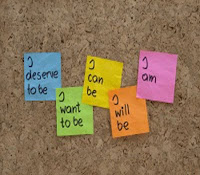
Our founder Dale Carnegie writes in the book ‘How to Win Friends and Influence People’ that ‘Enthusiasm’ is the secret of success and the key to motivating yourself. I’ve seen this work for many clients over the years as they’ve found a way to get excited about the task in hand. Focusing first on shifting our attitude towards a particular task before we start it can be the key. Like all techniques though it doesn’t work every time..... so what else can help us achieve what we don’t initially think is possible.
During a recent time management seminar we held a discussion on this topic of motivation and the question of tackling difficult or large tasks came up..... We were talking at the time about writing business plans and strategy. Everyone agreed that at some time or other they had been in the situation where they had to do a certain project and found themselves procrastinating as they didn’t even know where to start. Experiences discussed went all the way back to school and university days of writing essays. Through our conversation we came up with a few ideas of how to get started:
1.Breaking down the task into manageable pieces: This is a common technique but we added one refinement which was make your first task simply to decide how you’re going to tackle the project. By taking away the pressure of actually starting the task and just focusing on working out the ‘How’ we can often stop procrastinating and get started.
2. Make a small commitment: We discussed that it can make sense to set a time limit deciding that you’re going to work on a task for only one hour and no more can again help us to get started. Sometimes even taking this down to a ten minute commitment can be enough to get things moving. You might say ten minutes isn’t enough but give it a try and see how it impacts your attitude.
3. The burning platform: The idea is simple set the platform that you’re standing on alight and you’ll have to find the motivation to jump off it before it burns away. In business terms this can be committing to a colleague or perhaps a client that you’ll have something with them by a certain time. Our advice would be think carefully about this one before you try it but again it can really help you get moving.
If you haven’t tried these techniques before then give one a try today and see what difference it makes. If you’re looking to unlock your potential and are struggling to find the answer then come and join us this week at the preview of our flagship programme the Dale Carnegie Course in Effective Communications and Human Relations and find out how to motivate yourself to action.
Click here to book a place.
As always I hope you find the tips useful and hope you can join us for a training session soon.
So what is the secret? Based on my own experiences and those I’ve heard from clients over the years the question should actually be in the plural what are the secrets? ..... There are many ways to motivate yourself to action the trick is finding what works for you.

Our founder Dale Carnegie writes in the book ‘How to Win Friends and Influence People’ that ‘Enthusiasm’ is the secret of success and the key to motivating yourself. I’ve seen this work for many clients over the years as they’ve found a way to get excited about the task in hand. Focusing first on shifting our attitude towards a particular task before we start it can be the key. Like all techniques though it doesn’t work every time..... so what else can help us achieve what we don’t initially think is possible.
During a recent time management seminar we held a discussion on this topic of motivation and the question of tackling difficult or large tasks came up..... We were talking at the time about writing business plans and strategy. Everyone agreed that at some time or other they had been in the situation where they had to do a certain project and found themselves procrastinating as they didn’t even know where to start. Experiences discussed went all the way back to school and university days of writing essays. Through our conversation we came up with a few ideas of how to get started:
1.Breaking down the task into manageable pieces: This is a common technique but we added one refinement which was make your first task simply to decide how you’re going to tackle the project. By taking away the pressure of actually starting the task and just focusing on working out the ‘How’ we can often stop procrastinating and get started.
2. Make a small commitment: We discussed that it can make sense to set a time limit deciding that you’re going to work on a task for only one hour and no more can again help us to get started. Sometimes even taking this down to a ten minute commitment can be enough to get things moving. You might say ten minutes isn’t enough but give it a try and see how it impacts your attitude.
3. The burning platform: The idea is simple set the platform that you’re standing on alight and you’ll have to find the motivation to jump off it before it burns away. In business terms this can be committing to a colleague or perhaps a client that you’ll have something with them by a certain time. Our advice would be think carefully about this one before you try it but again it can really help you get moving.
If you haven’t tried these techniques before then give one a try today and see what difference it makes. If you’re looking to unlock your potential and are struggling to find the answer then come and join us this week at the preview of our flagship programme the Dale Carnegie Course in Effective Communications and Human Relations and find out how to motivate yourself to action.
Click here to book a place.
As always I hope you find the tips useful and hope you can join us for a training session soon.
David Anderson
Managing Director
Monday, 30 November 2009
What's Your Mountain?
 As we got out of the tent soon after dawn it was obvious that the weather was going to be fine. It was one of those September days when summer is still with you.
Glencoe, which can be dark and forbidding, was today bright, clear and welcoming. Our objective was out of our direct view but on our journey through the Glen the previous day its full might was seen – albeit from the safety of our car. The Aonach Eagach ridge runs on the northern side of the glen and its reputation as a fine ridge walk was well known.
Do you ever have those days when everything is set fair and yet when you look back from the start never gave a clue of how things would end up? Doesn’t matter whether its work or leisure we all have them, don’t we.
The climb to the ridge is significant for me, the hill walker, over 1000 metres straight up from sea level at Glencoe village to the col below the Pap of Glencoe and then on up to the ridge itself.
Like any job we have to do we plan what needs to happen when and in what sequence. The guide book said the usual route is east to west – we decided to go the other way. There’s usually a good reason for given advice; doesn’t matter what the situation and you ignore it at your peril.
When pushing the limits – whether organisational or individual you often get so far and hit the proverbial brick wall. So it was, that just over half way along the ridge, the proverbial came true. This time it was not a brick wall but a very narrow arête stone, no more than 20 feet in length and narrow enough to sit astride.
So what, I hear you say. Either side, below my suspended boots were near vertical drops into the floor of the glens on either side. “This is not a place I want to be right now,” I said to my companion as I turned to see where we had just come from and the view back along the ridge was amazing – but laid out an alternative that even having completed it I did not relish renegotiating.
This journey to the metaphorical ‘brick wall’ was not one I wished to do in reverse. So, as in business, going back was not an option. This was on the edge stuff if you’ll excuse the pun, but we had come so far it was right to see it through.
You see we had the skill, the strength, will and desire to complete the plan. Back in the office its easy to give up – out there it’s not an option – its life threatening.
The were so many powerful lessons on that day that have a place in business life, not just hill walking and scrambling, but the one that will stick with me the longest is about pushing the boundaries mental and physical.
I saw the significance of this when after climbing the buttress at the end of the arête when three climbers came the other way complete with interlinking ropes and who were visibly staggered to see us in tee shirts, shorts and climbing boots.
No challenge in the business environment is too great, no situation too intimidating, no problem too difficult to overcome, providing you have the required knowledge, skill and above all – the right attitude.
What’s your mountain?
David Pickering
Sales Consultant and Trainer
www.london.dalecarnegie.com
Friday, 9 October 2009
Nine Steps to Win-Win Conflict Resolution
 Conflict is a natural part of business and of life. Problems arise in the ways that you deal with these conflicts. Some people tend to take an approach that is too direct. Others shy away from confrontations to avoid hurting other people's feelings, to protect their own feelings, or because they lack confidence, which often leads to unresolved issues and lingering problems. There is middle ground.
Using the right approaches, you can deal with conflicts in effective ways that resolve the issues while maintaining positive relationships. This starts with clearly understanding the issues and the personalities involved. When you understand different styles of conflict resolution, you are able to see things from the other person's point of view. Simply having empathy for another person's perspective will go a long way towards resolving those conflicts.
Step 1: Have a positive attitude. Your attitude is essential to the outcome. You have a much better chance of coming to an outcome involving mutual gains if you approach the conflict as an opportunity to learn and achieve a win-win outcome.
Step 2: Meet on mutual ground. Find a mutually agreeable, comfortable, and convenient space to meet. Agree on when you will meet and how much time you want to devote to the process. Whenever possible, deal with conflict face-to-face.
Step 3: Do your homework. Take time to plan. You must not only know what is at stake for yourself, but you need to understand the other side's concerns and motivation. Take into consideration any history or past situations that might affect the resolution. Know the must-haves (non-negotiable items) and nice-to-haves (negotiable items). Determine the best resolution, a fair and reasonable compromise, and a minimally acceptable outcome.
Step 4: Look for shared interests. Get on the same side by finding and establishing similarities. Since conflict tends to magnify perceived differences and minimise similarities, look for common goals, objectives, or even gripes that illustrate that you are in this together. Focus on the future, talk about what is to be done, and tackle the problem jointly.
Step 5: Deal with facts, not emotions. Address problems, not personalities. Avoid any tendency to attack other people or to pass judgment on ideas and opinions. Avoid focusing on the past or blaming others. Maintain a rational, goal-oriented frame of mind. This will depersonalise the conflict, separate the issues from the people involved, and avoid defensiveness.
Step 6: Present alternatives and provide evidence. Create options and alternatives that demonstrate willingness to compromise. Consider conceding in areas that might have high value to others but are not that important to you. Frame options in terms of the other people's interests and provide evidence for your point of view.
Step 7: Be an expert communicator. Nothing shows determination to find a mutually satisfactory resolution to conflict more than applying excellent communication skills. Ask questions, listen, rephrase what you heard to check for understanding, and take a genuine interest in each person's concerns. Focus on ways in which you can move toward a resolution or compromise.
Step 8: End on a good note. Make a win-win proposal and check to make sure that everyone involved leaves the situation feeling they have won. Shake on it and agree on the action steps, who is responsible for each step, how success will be measured, and how and when the resolution will be evaluated. If there is a deadlock on non-critical issues, agree to disagree.
Step 9: Enjoy the process. Appreciate the benefits of learning other people's perspective. People report that after overcoming conflict and reaching an agreement, the relationship grew even stronger. Reflect and learn from each experience. Determine the criteria to evaluate the process and the solution.
Subscribe to:
Posts (Atom)